Vacuum in Bentonite Production
Case 14.06.2022
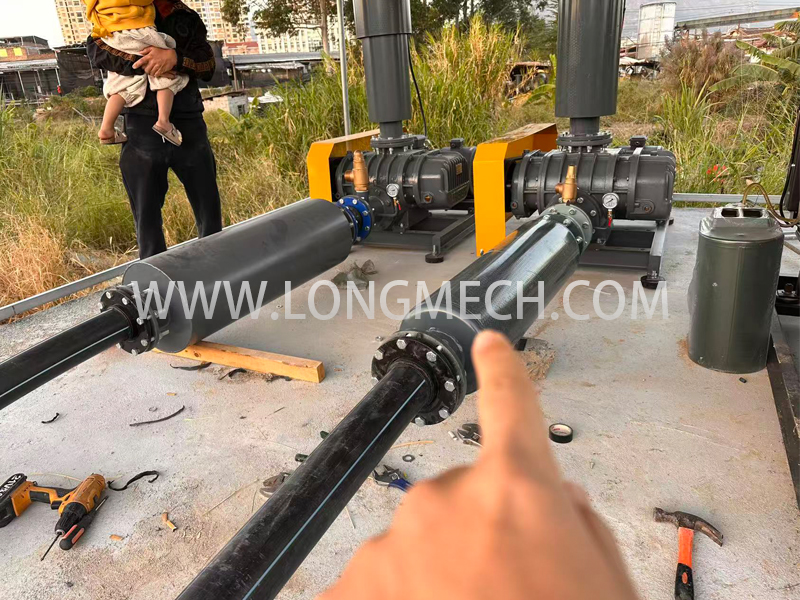
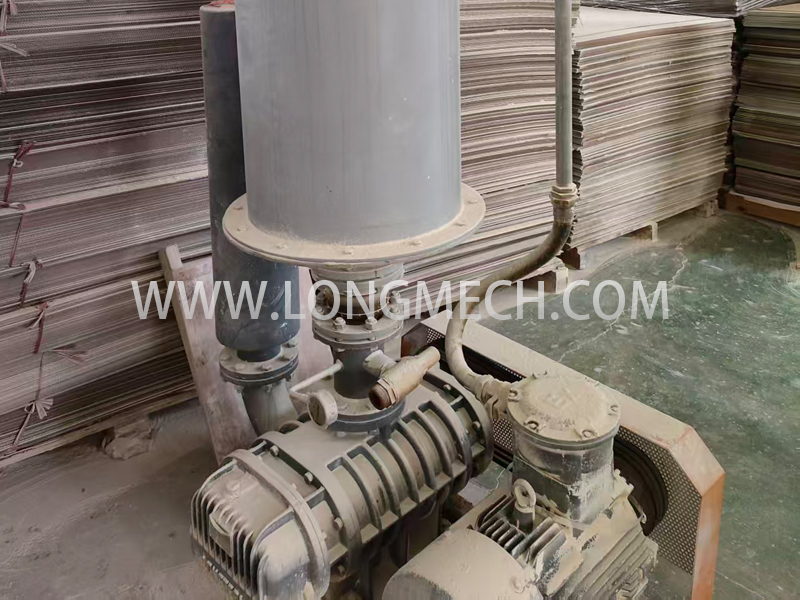
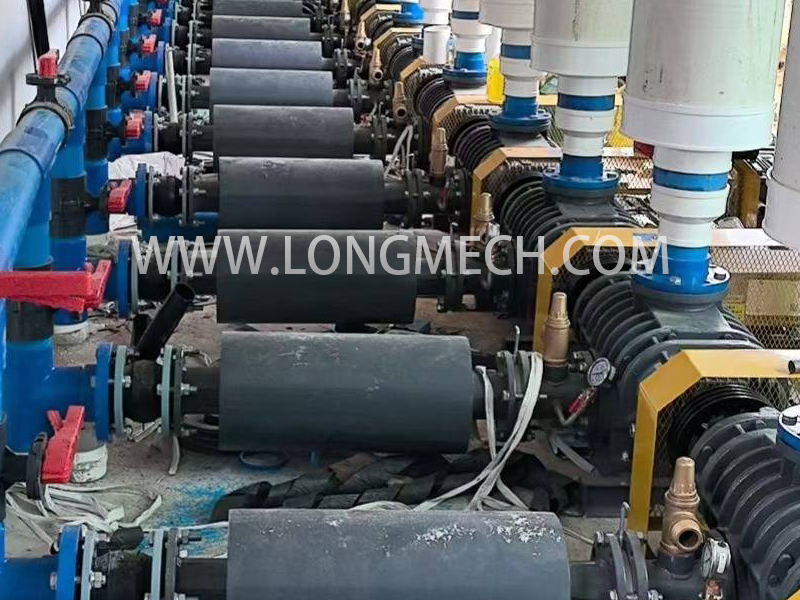
As an important non-metallic mineral, bentonite is widely used in metallurgical pellets, drilling mud, foundry, cat litter, environmental adsorbents and other fields due to its excellent swelling, suspending, bonding and adsorption properties. In the whole processing from raw ore to finished products, such links as hermetic powder conveying, air classification, drying ventilation, and process pressurization highly rely on stable and reliable air supply equipment. With core characteristics of constant air flow output, adaptive pressure, oil-free clean air, and stable continuous operation, Roots blowers have become key general machinery in bentonite production lines, covering the whole process of crushing, drying, grinding, modification, classification, packaging and storage.
1. Core Bentonite Production Processes and Roles of Roots Blowers
A standard bentonite production line mainly includes: raw ore crushing → airing/drying → grinding → sodium modification → classification → mixing → finished product packaging/storage. Roots blowers are mainly applied in the following four core sections:
1.1 Pneumatic Conveying of Powder (Core Application)
Bentonite processing mainly involves powder (usually 200–325 mesh), which is highly hygroscopic, prone to caking and dusting. Traditional mechanical conveying such as screws and bucket elevators suffers from poor sealing, heavy dust pollution, easy blockage, high wear rate and frequent maintenance. The pneumatic conveying system combining Roots blowers + closed pipelines has become the mainstream solution in the industry.
- Positive Pressure Dilute Phase Conveying (Most Commonly Used)Roots blowers generate stable positive pressure air flow of 20–50 kPa, conveying bentonite powder in suspension at high speed (15–30 m/s) inside pipelines, realizing fully closed transfer from crusher → dryer → pulverizer → classifier → finished product silo.
- Advantages: no dust emission, meeting environmental protection standards; long conveying distance (horizontal ≤ 300 m, vertical ≤ 30 m); flexible layout adapting to complex workshops; no mechanical contact wear ensuring high material purity; 24-hour continuous stable operation.
- Negative Pressure Suction ConveyingRoots vacuum pumps (negative pressure Roots blowers) create negative pressure in pipelines, sucking bentonite powder from silos, discharge ports and bag unpacking stations into pipelines for delivery to target equipment.
- Application: multi-point feeding, low-level suction, dust-free unpacking scenarios, avoiding manual feeding dust, especially suitable for clean conveying of ultra-fine powder and modified bentonite.
1.2 Air Classification and Powder Separation
Ground bentonite needs particle size classification (such as 200 mesh, 325 mesh, 600 mesh) to meet fineness requirements of different industries (precision casting, high-end cat litter, pharmaceutical-grade adsorbents, etc.).
- Roots blowers provide stable air flow to feed ground powder into classifiers/separators. Under centrifugal and air flow effects, fine powder is carried out by air flow while coarse powder falls back for re-grinding, achieving accurate particle size classification.
- Advantages: constant air flow ensures stable classification accuracy; oil-free compressed air avoids powder contamination; adaptive pressure suits different fineness and output adjustments.
1.3 Drying and Ventilation Assistance
- Enhanced Drying Effect: In rotary dryers or box dryers, Roots blowers cooperate with hot blast stoves for air supply circulation, accelerating moisture evaporation, shortening drying time and reducing finished product moisture content (controlled ≤ 5%).
- Tail Gas Dust Removal and Ventilation: Provide ash cleaning air flow or negative pressure induced air for bag filters and cyclone separators, collecting dust and purifying tail gas to realize environmentally friendly emission.
1.4 Sodium Modification and Process Mixing
Sodium modification (conversion from calcium-based to sodium-based) is critical to improve bentonite performance: raw ore powder, sodium agent (soda ash) and water must be fully mixed and reacted.
- Roots blowers can be used for airflow stirring in silos and auxiliary fluidization in mixers, evenly mixing powder with modifiers, preventing agglomeration, and improving sodium modification uniformity and product stability.
- In some processes, they are used for pneumatic arch breaking: preventing bridging and blockage of bentonite powder in silos and ensuring continuous stable discharging.
1.5 Finished Product Packaging and Silo Pressure Balancing
- Pneumatic feeding, level control and silo pressurization for packaging machines and filling machines are all powered by Roots blowers.
- Large finished product silos are equipped with pressure equalizing/ventilating systems. Roots blowers supply slight positive pressure or extract negative pressure to prevent moisture absorption under negative pressure and dust spraying under positive pressure, protecting powder quality.
2. Core Advantages of Roots Blowers in Bentonite Production
- Constant Air Flow for Stable ConveyingPositive displacement feature ensures air flow unaffected by pressure fluctuations, with uniform conveying speed, avoiding bentonite sedimentation and pipeline blockage, and stabilizing output.
- Oil-Free Clean AirNo lubricating oil in the working chamber and non-contact rotor operation ensure no oil mist in conveying air, avoiding bentonite contamination (especially for food/pharmaceutical grade, cat litter and high-purity adsorbents).
- Adaptable to High Dust and Humid ConditionsModels with dust-proof sealing, anti-corrosion coating and stainless steel fittings resist bentonite dust abrasion and humid environments, featuring long service life and low failure rate.
- Adaptive Pressure and Strong CompatibilityAir pressure automatically adjusts with pipeline resistance, adapting to different conveying distances, material heights and pipeline layouts. One blower can supply air for multiple sections.
- Environmentally Friendly, Energy-Saving and Easy MaintenanceFully closed conveying realizes zero dust emission meeting environmental requirements; simple structure with few wearing parts, long continuous service life, and much lower maintenance cost than mechanical conveying.
3. Selection Guidelines (For Bentonite Applications)
- Air Flow: Calculated based on output, fineness and conveying distance; conventional 1–60 m³/min.
- Air Pressure: Overcoming pipeline, material and equipment resistance; commonly 29.4–58.8 kPa (3000–6000 mmH₂O).
- Material: Cast iron for general working conditions; anti-corrosion coating + stainless steel rotors for high-humidity/saline-alkali environments; all stainless steel for ultra-fine/high-purity bentonite.
- Protection: IP54/IP65 dustproof and waterproof motors for outdoor/high-dust areas; low-noise three-lobe type with sound enclosure (≤75 dB) for workshop noise reduction.
- Configuration: One working, one standby is recommended; variable frequency blowers are suggested for long-distance/high-output lines to adjust air flow on demand and save energy by 15%–30%.
4. Typical Application Cases
- Metallurgical Pellet Bentonite: 15 kW Roots blower + positive pressure conveying system realizes fully closed conveying for crushing → grinding → modification → mixing → batching, with a daily capacity of 300 tons and zero dust emission.
- Cat Litter Bentonite: Combination of negative pressure suction and positive pressure conveying enables dust-free unpacking and stable conveying of ultra-fine powder (325 mesh), ensuring mixing uniformity and product cleanliness.
- Drilling Mud Bentonite: High-pressure Roots blowers (58.8 kPa) are used for long-distance (200 m) conveying and silo fluidization, solving blockage problems of high-viscosity powder.
5. Conclusion
In modern, large-scale and environmentally friendly bentonite production, Roots blowers have been upgraded from auxiliary equipment to core power for powder conveying and process air supply. They effectively solve industrial pain points such as bentonite’s easy dusting, moisture absorption, caking and high-viscosity blockage, realizing efficient, closed, stable and clean continuous production, while reducing energy consumption, lowering maintenance, improving product quality and automation of production lines.
Selecting suitable Roots blowers and pneumatic conveying systems is a key step for bentonite enterprises to reduce costs, improve efficiency, meet environmental standards and enhance product competitiveness.