Wastewater Treatment
Case 14.06.2022
As the core power for biochemical aeration and process air supply
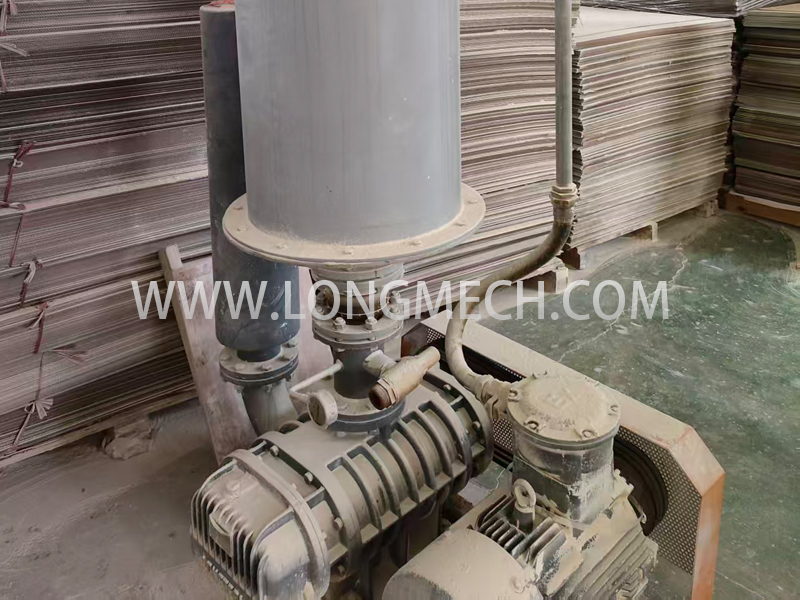
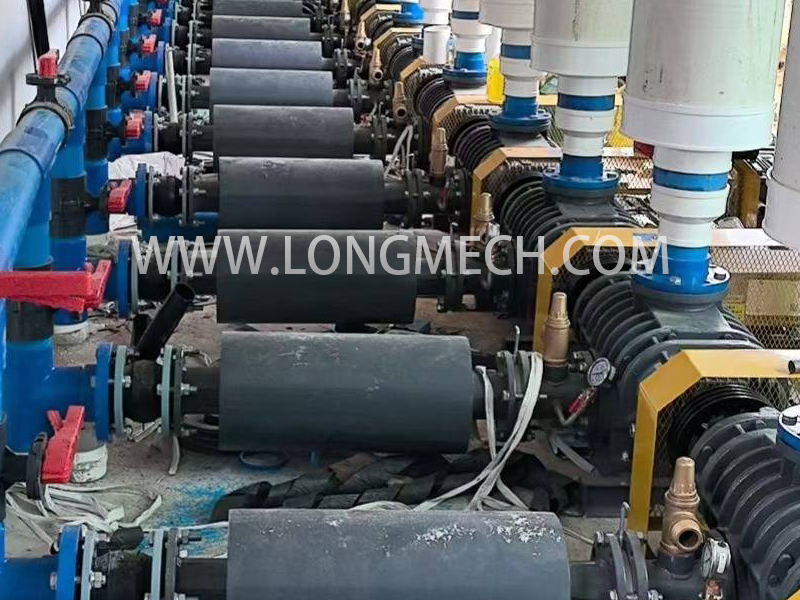
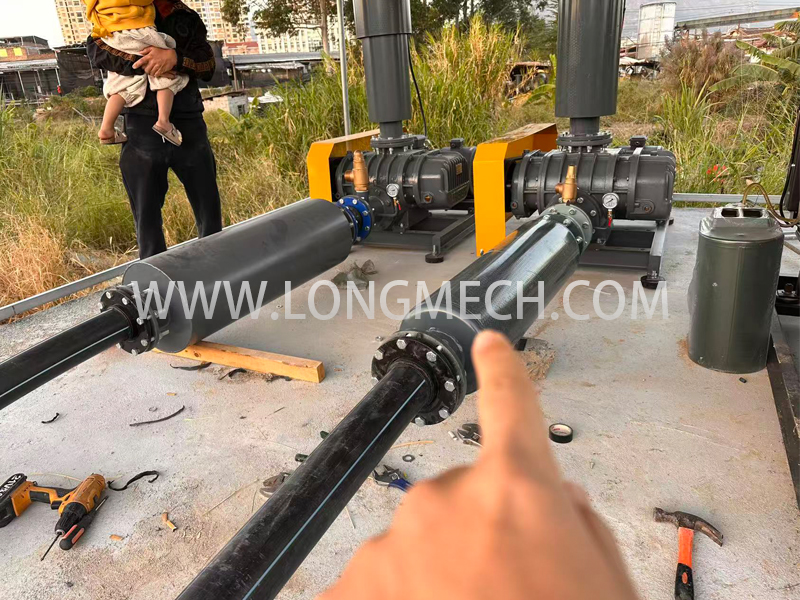
In wastewater treatment processes, aerobic biochemical treatment (such as activated sludge process, biofilm process) is the key stage for removing organic pollutants, nitrogen and phosphorus. Stable and efficient aeration and oxygen supply is critical to the normal operation of this stage. As a positive displacement blower, Roots blower has become the core power equipment for aeration systems in wastewater treatment plants due to its features of constant air flow, stable pressure, oil-free clean air and adaptability to harsh working conditions. It is widely used in the whole process including biochemical tank aeration, MBR membrane cleaning, sludge mixing, backwashing and other processes.
1. Core Application Scenarios of Roots Blowers in Wastewater Treatment
1.1 Aeration and Oxygen Supply in Biochemical Tanks (Main Application)
Both municipal and industrial wastewater treatment relying on activated sludge process, SBR, oxidation ditch, biological contact oxidation tank and other processes use Roots blowers for continuous air supply.
- Oxygen supply: The blower delivers air through pipelines to microporous diffusers at the tank bottom, producing a large number of tiny bubbles to efficiently dissolve oxygen into wastewater. It provides dissolved oxygen (DO usually maintained at 2–4 mg/L) for aerobic microorganisms (bacteria, protozoa, etc.) to metabolize and decompose COD and BOD in wastewater, and convert ammonia nitrogen into nitrate to achieve water purification.
- Mixing and stirring: Upward airflow strongly agitates the water body, preventing activated sludge from settling at the bottom and ensuring full mixing of wastewater, sludge and oxygen, so that microorganisms can efficiently contact pollutants and improve biochemical reaction efficiency.
1.2 MBR Membrane Bioreactor – Membrane Fiber Air Scouring
In the MBR process, Roots blowers provide medium and high-pressure airflow (usually 40–80 kPa) to blow upward from under membrane modules toward membrane fibers.
- High-speed airflow produces shear force and turbulence to continuously wash away sludge and contaminants attached to membrane surfaces, preventing membrane fouling and clogging, maintaining membrane flux and filtration efficiency, and extending membrane cleaning cycles and service life.
1.3 Sludge Treatment System
- Sludge aeration and stirring: In sludge thickening tanks and aerobic digestion tanks, Roots blowers supply air into sludge to provide oxygen for aerobic microorganisms, accelerating organic matter decomposition, reducing sludge volume and stabilizing sludge properties.
- Pneumatic arch breaking for sludge silos: Prevents bridging and blockage of dewatered sludge in silos and ensures smooth discharge.
1.4 Other Auxiliary Processes
- Backwash air supply: Provides airflow for backwashing filters (quartz sand filters, biological filters), combined with water flow to clean filter media and restore filtration capacity.
- Pre-aeration: Oxidizes reducing substances in wastewater before it enters biochemical tanks, achieving preliminary deodorization and removal of iron and manganese.
- Dosing mixing and air-lifting: Used for agent mixing, air-lifting transportation of wastewater or sludge and other auxiliary links.
2. Core Advantages of Roots Blowers for Wastewater Treatment
- Constant air flow ensures stable process performanceAs a positive displacement blower, the air flow of Roots blower is hardly affected by back pressure (water depth, pipeline resistance) and outputs steadily at fixed speed. It keeps dissolved oxygen stable in biochemical tanks and avoids reduced microbial activity and treatment efficiency caused by air flow fluctuation.
- Oil-free clean air avoids secondary pollutionThe blower operates with non-contact rotors and no internal lubrication, so the output air contains no oil mist. This prevents oil contamination of activated sludge, clogging of diffusers and MBR membranes, ensuring long-term stable operation of biochemical systems and membrane modules.
- Wide pressure range suitable for different water depthsStandard single-stage Roots blowers can reach pressure of 29.4–98 kPa, meeting aeration requirements for tanks of 3–9 meters deep. Two-stage series provides higher pressure for deep tanks and high-resistance pipelines.
- Reliable structure adaptable to harsh environmentsSimple and robust structure enables 24-hour continuous stable operation in high-humidity, high-dust and corrosive gas environments of wastewater plants, with low failure rate and easy maintenance.
- Variable frequency energy saving adapts to fluctuating water qualityEquipped with variable frequency control system, air flow can be automatically adjusted according to real-time demand of water quality, quantity and dissolved oxygen, saving 15%–35% energy compared with fixed-frequency blowers and greatly reducing energy cost for wastewater plants.
3. Selection Guidelines for Roots Blowers in Wastewater Treatment
- Air flow: Calculated based on daily wastewater capacity, COD/BOD concentration and oxygen demand, generally 5–100 m³/min.
- Air pressure: Mainly determined by aeration tank water depth. Estimated formula:Pressure (kPa) ≈ (water depth in meters + 1m) × 9.8For conventional 4–6m deep tanks, pressure is 50–70 kPa.
- Material: Cast iron for general wastewater; stainless steel rotor / anti-corrosion coating for corrosive gas containing hydrogen sulfide.
- Configuration: One duty, one standby is recommended. Large plants prefer variable frequency three-lobe Roots blowers (low noise, high efficiency, small pulsation). Submersible Roots blowers are suitable for noise-sensitive areas.
4. Conclusion
Roots blower is an indispensable core equipment in modern wastewater treatment, known as the “heart” of the biochemical system. It not only supplies essential oxygen for microorganisms to ensure efficient degradation of pollutants, but also performs multiple functions including membrane cleaning, sludge treatment and backwashing.
Its stability, reliability, energy saving and oil-free design fully meet the strict requirements of wastewater treatment plants for air supply equipment, making it crucial for stable discharge compliance, cost reduction, efficiency improvement and long-term safe operation.