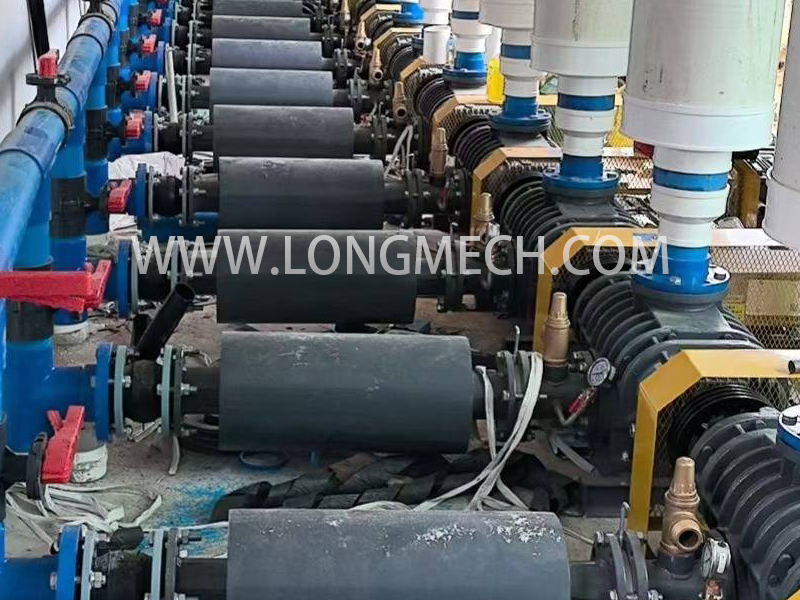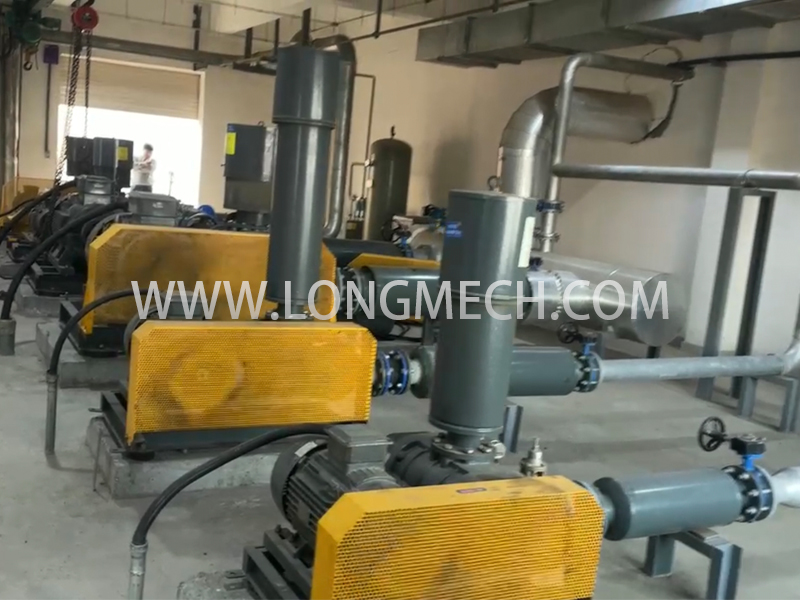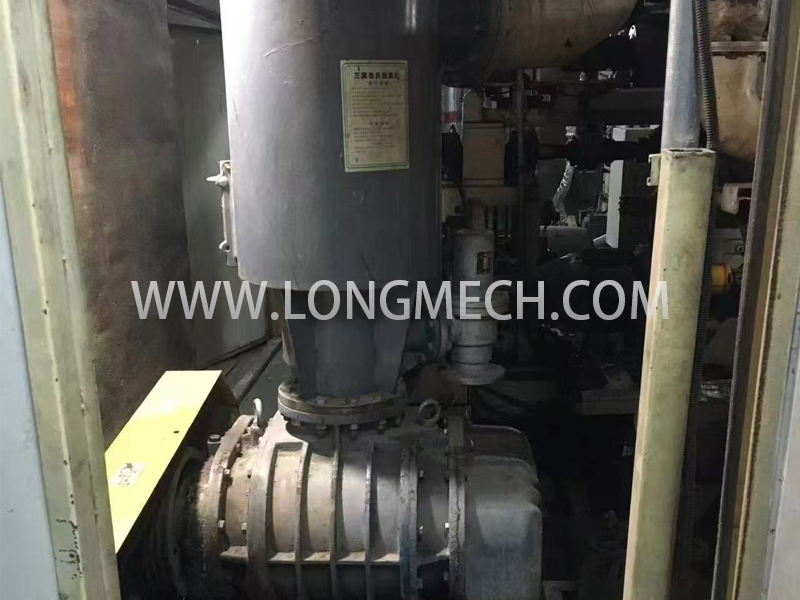
Longmech Roots vacuum pump in Paper Industry

Case 14.06.2022

Roots blowers, with their characteristics of constant air flow, stable pressure, oil-free clean air, corrosion resistance and wear resistance, have become core pneumatic equipment throughout the papermaking process including pulping, papermaking, wastewater treatment and pneumatic conveying. They are widely used in key processes such as pulp agitation, vacuum dewatering, forming suction, drying ventilation, waste gas treatment and material conveying, which directly affect paper quality, production efficiency and energy consumption cost.

1. Core Application Scenarios

1.1 Pulp Preparation and Agitation (Pulping Section)

  • Pneumatic mixing and blending: High-pressure airflow impacts pulp to evenly disperse fibers, fillers and chemicals (sizing agents, dyes, bleaching agents), avoiding sedimentation and agglomeration, and improving pulp uniformity and reaction efficiency.
  • Black liquor / green liquor aeration and oxidation: In the alkali recovery process, oxygen is supplied to black liquor tanks to oxidize reducing substances, stabilize black liquor properties and assist evaporation and concentration.
  • Pneumatic conveying of pulp: Low-pressure dense-phase conveying of wood chips, wet pulp and broke pulp, replacing mechanical pumps with no clogging, no fiber entanglement and low maintenance.

1.2 Vacuum Dewatering in Papermaking (Core Application)

In the forming section and press section, Roots vacuum pumps (negative pressure type) provide stable vacuum of -30~-60kPa:

  • Forming section vacuum dewatering: Adsorb pulp on the forming fabric to quickly filter out free water, form a uniform wet web, and improve forming speed and paper formation.
  • Vacuum transfer / couch roll: Negative pressure adsorbs wet paper and transfers it smoothly to the press section, preventing paper breaks and wrinkles.
  • Vacuum pressing: Further dewatering to reduce moisture before the drying section and cut steam consumption.
  • Advantages: dry oil-free operation, stable vacuum, no cavitation, saving 15%~30% water and electricity compared with liquid ring pumps.

1.3 Paper Drying and Ventilation (Drying / Finishing Section)

  • Auxiliary ventilation in drying section: High-pressure air breaks the water film on the paper surface and disturbs hot airflow, accelerating moisture evaporation and increasing drying rate by 10%~20%.
  • Paper cooling and static elimination: Cold air cooling and air knife smoothing prevent curling, eliminate static electricity and avoid cylinder sticking.
  • Forced workshop ventilation: Remove paper dust, steam and chemical volatiles (such as chlorine and sulfur), 25~30 air changes per hour to ensure safety and hygiene.

1.4 Wastewater and Waste Gas Treatment

  • Biological aeration for wastewater: Papermaking wastewater has high COD and fiber content. Roots blowers supply constant air flow for oxygen supply to enable activated sludge to degrade organic matter; anti-winding impellers adapt to high-fiber working conditions.
  • Waste gas collection and conveying: Collect odor from cooking and bleaching sections and send it to alkali recovery furnaces or RTO incinerators for standard emission and deodorization.

1.5 Pneumatic Conveying and Auxiliary Processes

  • Powder / chemical conveying: Convey calcium carbonate, talcum powder, starch and caustic soda in a closed, dust-free and continuously stable way.
  • Air knife cleaning: Remove fibers and size from fabrics and roll surfaces to extend fabric service life.
  • Backwash air supply: Clean white water filters and multi-media filters to restore filtration capacity.

2. Advantages for the Paper Industry

  1. Constant air flow ensures stable processAir volume remains stable despite pressure fluctuations, with constant vacuum / wind pressure, resulting in uniform paper formation, consistent moisture and low paper breakage rate.
  2. Oil-free and cleanNo oil mist avoids pulp contamination, fabric clogging and negative effects on paper whiteness and strength.
  3. Anti-corrosion and anti-cloggingStainless steel / anti-corrosion coating, wide flow passage and anti-winding impellers resist acid and alkali (pH 2~13) and fiber blockage.
  4. High reliability and long service lifeSimple structure enables continuous operation over 8,000 hours, adapting to 24-hour high-intensity production.
  5. Variable frequency energy savingAutomatically adjust air flow according to machine speed, pulp type and moisture content, saving 15%~35% electricity.

3. Selection Guidelines

  • Vacuum dewatering: Flow rate 20~150m³/min, vacuum -40~-60kPa, with three-lobe, variable frequency, anti-corrosion and anti-winding design.
  • Aeration / agitation: Flow rate 10~200m³/min, pressure 30~70kPa, equipped with anti-clogging impellers and acid & alkali resistance.
  • Conveying / ventilation: Selected based on distance, material and air volume, with high pressure and wear resistance.
  • Configuration: One working, one standby; key production lines adopt two working, one standby.

4. Conclusion

Roots blower is the “pneumatic heart” of paper production lines, covering pulping, papermaking, drying and environmental protection. Its stability, cleanliness, energy saving, corrosion resistance and anti-clogging performance perfectly match the papermaking industry’s harsh conditions of high speed, continuity, high humidity, corrosion and fiber-rich environment. It is key equipment for increasing machine speed, stabilizing quality, reducing energy consumption and meeting environmental standards.