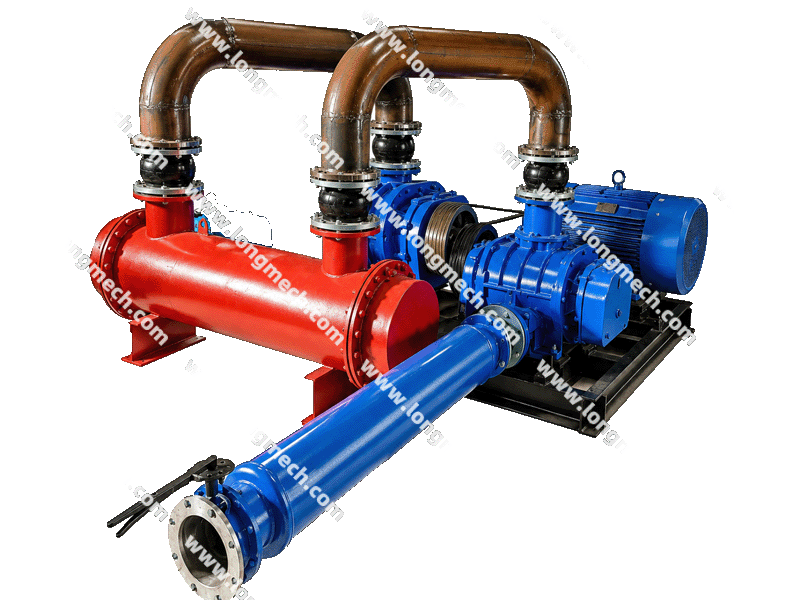
Double-stage Roots blower
Manufacturer: Longmech Machinery CO.,LTD
Place of Origin: China
Product Name: Roots blower
Product Model: SR50-400
Pressure: Postive pressure
Feature: high pressure
specification: Contact us
Overall dimensions: Contact us
Applicable Industries: Pneumatic conveying, metallurgy, chemical industry, building materials, grain, food, medicine, paper making, printing, textile, environmental protection dust removal, garbage disposal, laboratory vacuum, tobacco, plastic, desulfurization and denitration, material adsorption, etc
Category:Roots blowers
Introduction
(Equipment for Pneumatic Conveying Systems in Ceramics, Building Materials, Paper Making, Aquaculture, Sewage Treatment, Food and Other Industries)
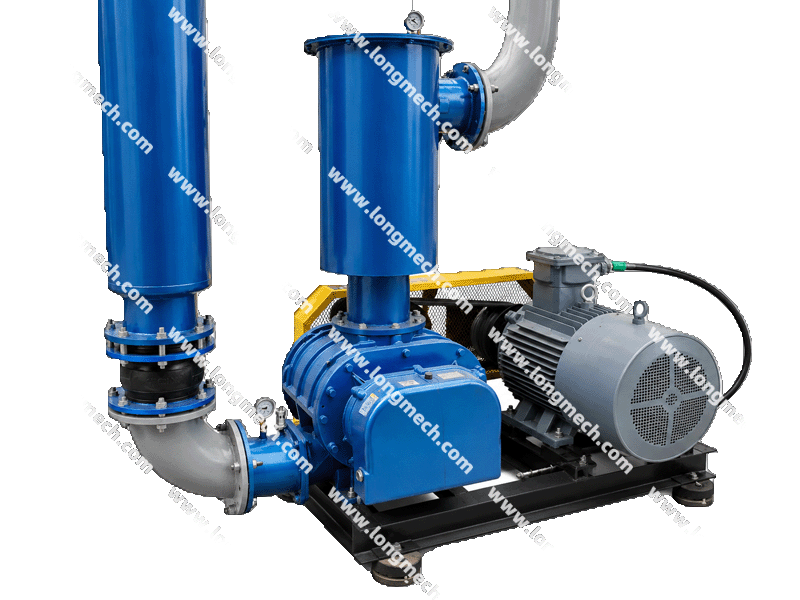
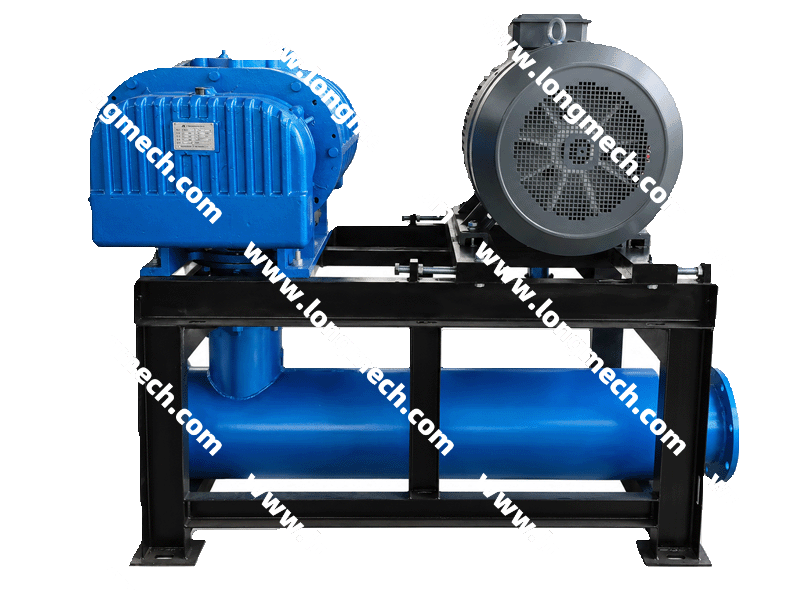
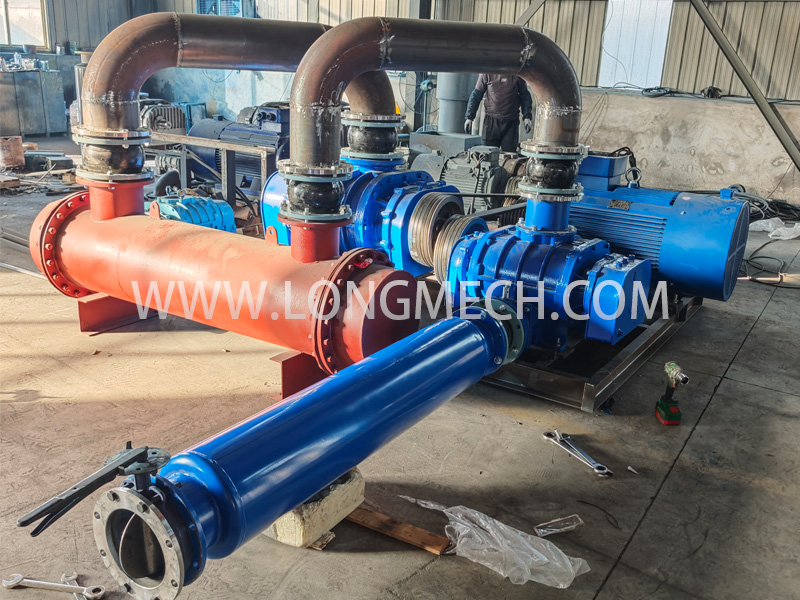
Double-stage Roots blowers usually operate with two Roots blowers of similar pressure connected in series. After the gas is pressurized in the first stage, it is cooled to below 40°C through an intercooler before entering the second-stage compression. The maximum pressure boost of the unit can reach 177 kPa. The equipment adopts belt drive or direct drive via a double-shaft extension motor, and is mainly used in pneumatic conveying systems in ceramics, building materials, paper making, electric power, petroleum, chemical industry, textile, aquaculture, sewage treatment, food and other industries.
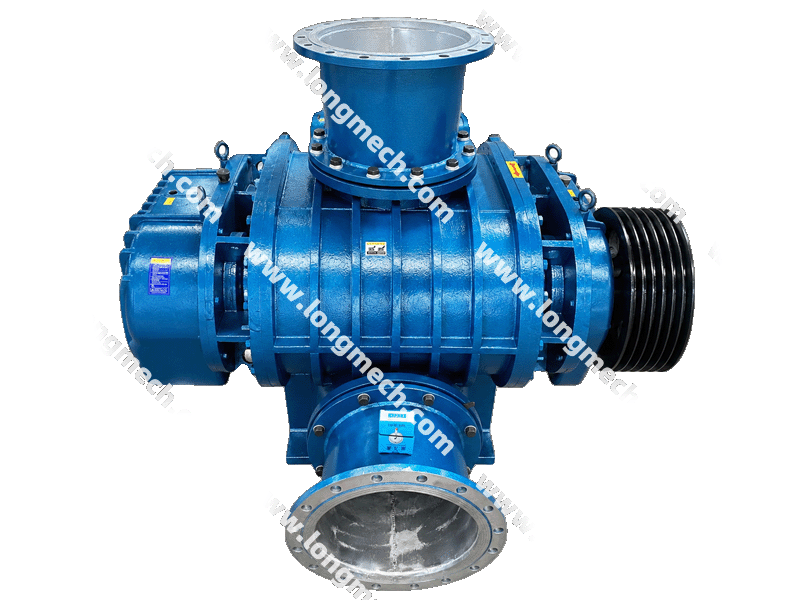
Inside such blowers, there are two three-lobe rotors rotating in opposite directions. Each three-lobe rotor is supported by two bearings. The rotors maintain a constant clearance and rotate without contact through synchronous spur gears. Tiny clearances are reserved between rotors, between rotors and the casing, and between rotors and the end plates, enabling non-contact rotation. The conveying medium is air and neutral gases, but it is not suitable for conveying flammable, explosive, toxic or highly corrosive gases. The impeller and shaft adopt an integrated structure, equipped with imported fluororubber oil seals as well as pressure and temperature control devices. During operation, the internal clearances of the equipment need to be regularly inspected and adjusted to prevent rotor friction. The industrial technological environment involves technological development directions such as blower efficiency optimization and cooling system design.
Basic Concept
A double-stage Roots blower is a positive displacement blower, usually composed of two Roots blowers with similar pressure parameters connected in series to achieve a higher outlet pressure.
Its core working principle is that after being pressurized by the first-stage blower, the gas is cooled by an intercooler before undergoing second-stage pressurization.
This type of blower is widely used in pneumatic conveying systems in ceramics, building materials, paper making, electric power, petroleum, chemical industry, textile, aquaculture, sewage treatment, food and other industries.
Working Principle
A double-stage Roots blower is a device composed of two Roots blowers connected in series. Roots blowers are positive displacement blowers, and double-stage Roots blowers are usually assembled by connecting two Roots blowers with similar pressure parameters in series. Inside the casing of each blower, there are two three-lobe rotors rotating in opposite directions. Each three-lobe rotor is supported by two bearings. A pair of high-precision synchronous spur gears keeps the relative positions of the two rotors unchanged at all times, with a certain clearance maintained between rotors and between rotors and the casing for non-contact rotation. Due to the tiny clearances between rotors, between rotors and the casing, and between rotors and end plates, there is no friction or contact wear inside the working chamber.
Technical Parameters
Generally, double-stage series connection is adopted when the pressure exceeds 98 kPa. The air delivery volume is proportional to the rotating speed. The selection of double-stage Roots blowers is the same as that of ordinary Roots blowers, requiring confirmation of flow rate, pressure and conveying medium.
Application Fields
Scope of application: Widely used in pneumatic conveying systems in ceramics, building materials, paper making, electric power, petroleum, chemical industry, textile, aquaculture, sewage treatment, food and other industries.
Conveying Medium
Used for conveying air and various neutral gases, but not suitable for flammable, explosive, toxic or highly corrosive gases.
Selection Method
The selection method of double-stage Roots blowers is identical to that of ordinary Roots blowers. Key parameters to be confirmed include flow rate, pressure and conveying medium. The equipment is suitable for conveying air and various neutral gases, but not for flammable, explosive, toxic or highly corrosive gases.
Performance Features
- Double-stage three-lobe Roots blowers feature high volumetric efficiency and air supply capacity, low vibration during operation, good reliability and stable working characteristics.
- The impeller and shaft are of an integrated structure with minimal impeller wear, helping maintain stable performance during long-term continuous operation.
- The blower delivers gas forcibly, with the flow rate changing slightly with pressure. The outlet pressure depends on the back pressure, and the conveyed gas is not easily contaminated by oil.
- The bearings are properly selected to ensure balanced service life. Fluororubber oil seals are adopted, featuring high temperature resistance and wear resistance, which helps extend the overall service life of the blower and reduce failure rates.
- The blower has high volumetric utilization rate and volumetric efficiency, compact structure, diverse installation methods and clear maintenance requirements.
- Adopting a three-lobe rotor structure and specially designed air inlet and outlet, the blower features low vibration and noise. The unit is equipped with pressure and temperature control functions for operational protection.
Technical Characteristics
In the structural design of double-stage Roots blowers, tiny clearances are reserved between rotors, between rotors and the casing, and between rotors and end plates, resulting in no friction or contact wear in the working chamber. For key components, the impeller and shaft are integrated with no impeller wear; bearings are rationally selected for uniform service life; imported fluororubber oil seals are used, featuring high temperature resistance and wear resistance. In terms of manufacturing technology, introduced technologies are adopted, key parts are processed by imported machining centers, ensuring high precision of main engine components.
Maintenance
Double-stage Roots blowers are easy to operate and maintain. To ensure long-term stable operation, the internal clearances (including those between rotors, between rotors and the casing, and between rotors and end plates) must be regularly inspected and adjusted to prevent rotor friction.
Precautions
Double-stage Roots blowers have high requirements for internal clearances. During overhaul and routine maintenance, inadequate inspection and adjustment of clearances may cause friction between rotors and end plates, and in severe cases, rotor seizure or even blower scrappage.